

Most of us have seen someone react to something they have eaten. A rash appears, their eyes stream, they reach for an antihistamine and get on with their day. Uncomfortable, but manageable.
But what is Anaphylaxis, and how is it different from a more typical allergic reaction? Anaphylaxis is the point at which an allergic reaction stops being an inconvenience and becomes a medical emergency. It can develop within minutes of exposure, and the people around the casualty may not recognise what they are seeing until the situation is already serious.
Although that sounds alarming, there is real reassurance to hold onto. Anaphylaxis is highly survivable when it is spotted early and treated quickly, and deaths in the UK remain rare. What makes the difference is often whether someone nearby recognises the signs and acts without hesitation.
At Medic 365, our paramedics attend severe allergic reactions regularly, and the pattern is consistent. The best outcomes belong to the people who had someone confident beside them. That is why allergy and anaphylaxis response sits at the heart of our first aid training, so that when it happens in a canteen, a classroom or a warehouse, somebody in the room knows exactly what to do.
What Is Anaphylaxis? A Complete Guide To Recognising And Responding
Anaphylaxis can feel like a daunting subject, particularly if you are responsible for others at work, at school or at home. It does not need to be. The signs follow a recognisable pattern, and the response is simpler than most people expect.
Here is what this guide covers:
- What Does Anaphylaxis Mean?
- What Is Anaphylaxis Caused By?
- What Are The Signs Of Anaphylaxis?
- What Is Anaphylactic Shock?
- How Long Does Anaphylaxis Take?
- How Do You Use An EpiPen?
- What Happens After Anaphylaxis?
Recognising anaphylaxis is one part of a much broader skill set. Our first aid course in Milton Keynes covers severe allergic reactions alongside CPR, bleeding control and casualty assessment, all taught by clinicians who have managed these situations on the road.
What Does Anaphylaxis Mean?
Anaphylaxis, pronounced ana-fill-ax-is, is a severe and rapidly developing allergic reaction that affects the whole body rather than one isolated area. The term dates back to 1902, when French physiologists Charles Richet and Paul Portier combined the Greek words for “against” and “protection”. They had discovered that the immune system, the very thing designed to protect us, could turn on the body it was defending.
That is precisely what happens. When someone with a severe allergy encounters their trigger, their immune system misidentifies a harmless substance as a serious threat and floods the body with chemicals such as histamine. Blood vessels widen and begin to leak, the airways tighten, and blood pressure can fall sharply.
The crucial distinction is scale. A mild allergic reaction tends to stay local, producing an itchy rash or a runny nose. Anaphylaxis involves multiple body systems at once, most importantly breathing and circulation, and it will not resolve on its own. Antihistamines have no meaningful effect on it. Adrenaline is the only first-line treatment, and it needs to be given early.
If you would like a broader overview of how allergies develop and progress, our guide to allergic reaction symptoms explains the full spectrum from mild irritation to emergency.

What Is Anaphylaxis Caused By?
Anaphylaxis is triggered by an allergen, a substance the immune system has wrongly flagged as dangerous during an earlier exposure. That first encounter often causes no reaction at all, which is why anaphylaxis can seem to appear from nowhere in someone who has eaten a food safely for years.
Food is the most common trigger, particularly in children and young adults. Frequent culprits include peanuts, tree nuts such as walnuts, cashews, hazelnuts and Brazil nuts, cow’s milk, eggs, shellfish, fish, soy, wheat and sesame or sunflower seeds.
Insect stings account for a significant share of cases in adults, most often from wasps and bees, though hornets and ants can also provoke a reaction.
Medicines can trigger anaphylaxis, with penicillin and other antibiotics, non-steroidal anti-inflammatory drugs such as ibuprofen and aspirin, and the contrast dyes used in CT scans among the recognised causes.
Latex remains a workplace concern, appearing in disposable gloves, catheters, adhesive tapes and balloons, which makes it particularly relevant in healthcare and catering settings.
Less commonly, anaphylaxis can be provoked by exercise, sometimes only when combined with a specific food, or by extreme temperature changes. In a proportion of cases no trigger is ever identified, which is known as idiopathic anaphylaxis.
People with asthma, eczema or existing allergies carry a higher risk, and those with poorly controlled asthma face a greater chance of a severe reaction. The NHS maintains detailed guidance on common triggers and how to avoid them.

What Are The Signs Of Anaphylaxis?
Symptoms develop fast, usually within minutes of exposure. The reaction rarely announces itself politely, and someone experiencing it may become confused or frightened, so the people around them often need to make the call.
Airway and breathing
- Swelling of the throat or tongue
- Difficulty swallowing, a tight throat, or a hoarse voice
- Wheezing, coughing or noisy breathing
- Breathing that is laboured or unusually fast
Circulation and consciousness
- Feeling faint, dizzy, or collapsing
- Skin that feels cold or clammy to the touch
- Blue, grey or pale skin, lips or tongue, which on brown or black skin may show most clearly on the palms of the hands or the soles of the feet
- Sudden tiredness, confusion or a sense of impending doom
Skin and stomach
- A raised, swollen or itchy rash
- Swelling of the lips, eyes or face
- Stomach pain, nausea or vomiting
A useful rule of thumb: any allergic reaction involving breathing difficulty, swelling of the airway, or a sudden drop in alertness should be treated as anaphylaxis until proven otherwise. A skin rash is common but not essential, and around one in five cases occur without one, which is why waiting for hives before acting is a mistake.
What Is Anaphylactic Shock?
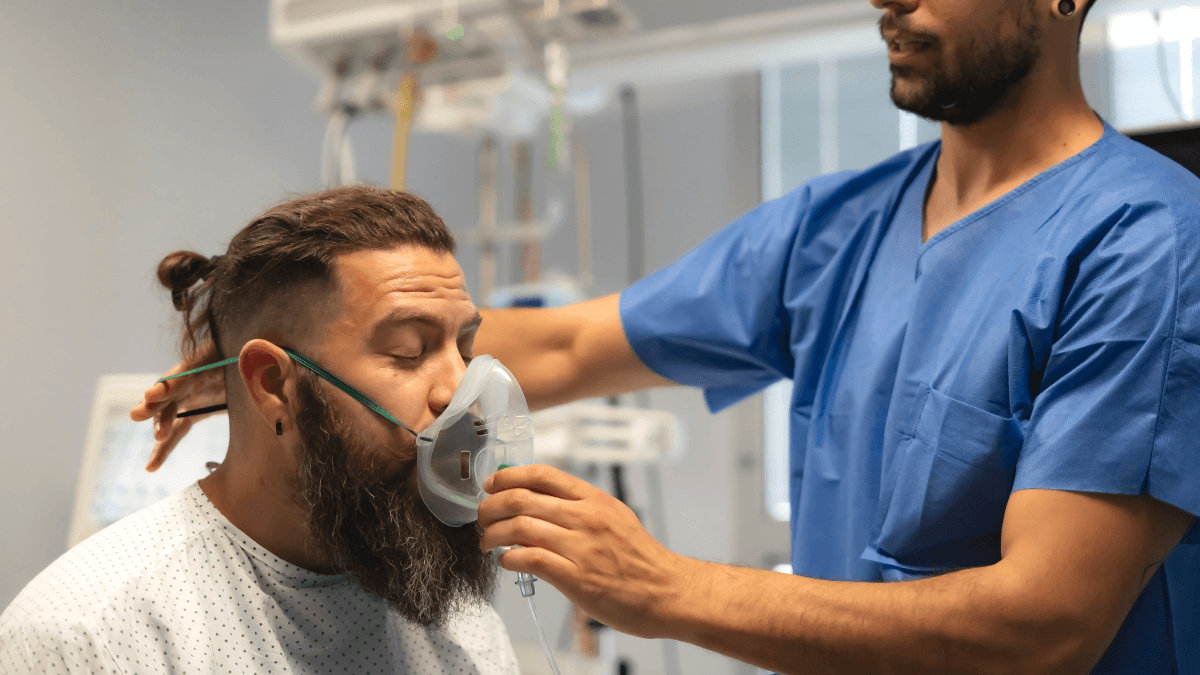
The terms anaphylaxis and anaphylactic shock are often used interchangeably, but they describe slightly different things. Anaphylactic shock refers specifically to the circulatory collapse that can occur during anaphylaxis.
As histamine floods the system, blood vessels dilate dramatically and their walls become leaky, allowing fluid to escape into surrounding tissue. Blood pressure falls, and the heart can no longer push enough oxygenated blood to the brain, kidneys and other vital organs. The person becomes pale, clammy and confused, and may lose consciousness.
This is the same underlying process that defines shock in other emergencies, and our guide to what shock is, and its signs, causes and types explains that mechanism in more depth.
The most important thing to remember is never to stand someone up or help them walk if they are in anaphylactic shock. Doing so can be fatal because their blood pressure may be dangerously low, meaning very little blood is returning to the heart. Keep them lying flat with their legs raised, and do not let them sit or stand, even if they say they are starting to feel better..
Recognising deterioration early is a core part of casualty assessment, and something we practise extensively on our first aid at work courses in Milton Keynes with employers across a range of industries.
How Long Does Anaphylaxis Take?
Anaphylactic reactions usually start within minutes of coming into contact with an allergen. Medicines and insect stings can cause symptoms very quickly, sometimes in just a few seconds. Reactions to food often take a little longer and usually begin within 30 minutes, although in some cases they may not appear for several hours.
Once underway, the reaction can escalate very quickly, which is why adrenaline should be given at the first clear sign rather than held back to see whether things settle.
There is a second timeline worth understanding. A biphasic reaction occurs when symptoms subside after initial treatment and then return, sometimes hours later, without any further contact with the trigger. The second wave can be milder, equally severe, or worse. It usually appears within the first twelve hours, though it can occur up to seventy-two hours afterwards.
Biphasic reactions are the main reason hospital observation is not optional, even when someone appears to have recovered completely. They are also why people are advised to carry two adrenaline auto-injectors rather than one. The first may already have been used.

How Do You Use An EpiPen?
An EpiPen is one of several adrenaline auto-injectors available in the UK, alongside Jext and Emerade. All deliver a measured dose of adrenaline into the thigh muscle, and all are designed to be used by someone with no medical training.
If you believe someone is having an anaphylactic reaction:
1. Use the auto-injector immediately
If in doubt, use it. Adrenaline given unnecessarily is far less dangerous than adrenaline given too late.
2. Inject into the outer mid-thigh
Remove the safety cap, press the device firmly against the outer thigh until it clicks, and hold it in place. Hold times differ by brand — three seconds for EpiPen, five for Emerade, ten for Jext — so follow the instructions printed on the side of the device. It can be given through clothing if necessary.
3. Call 999 and say “anaphylaxis”
Do this immediately after giving adrenaline, and say the word clearly, as it changes the response the ambulance service sends. Call even if the person seems to be improving.
4. Position them safely
Lie them flat with their legs raised. If they are struggling to breathe, let them sit up slowly, but return them to lying down as soon as possible. Someone who is pregnant should lie on their left side. Never let them stand or walk.
5. Give a second dose after five minutes
If there has been no improvement, use a second auto-injector in the opposite thigh.
6. Be ready to start CPR
If they stop breathing normally or become unresponsive, begin chest compressions and continue until emergency services arrive.
The MHRA’s adrenaline auto-injector safety campaign provides brand-specific training videos, and manufacturers supply trainer devices containing no needle or medicine. Practising with one is the single best way to remove hesitation on the day.

What Happens After Anaphylaxis?
Anyone who experiences anaphylaxis needs hospital assessment, regardless of how well they seem afterwards. Adrenaline buys time; it does not end the reaction.
In hospital, treatment may involve additional adrenaline, given either by injection or through an infusion, along with oxygen and intravenous fluids to help restore blood pressure. Most people are then monitored for between two and twelve hours. A longer stay may be needed if the reaction was severe or took time to improve, as symptoms can sometimes return after initially settling.
Before discharge, patients should be given two adrenaline auto-injectors or a prescription for them, along with a demonstration of how and when to use the specific device prescribed. A referral to an allergy specialist usually follows, for testing to confirm the trigger and advice on avoiding it.
Longer term, managing a diagnosis means carrying two in-date auto-injectors at all times, checking expiry dates regularly, and making sure family, colleagues and friends know where the devices are kept and how to use them. Anaphylaxis UK offers practical support for individuals, schools and employers adjusting to that reality.
Be Ready To Act With Medic 365
Anaphylaxis is one of the few medical emergencies where an ordinary person with no clinical background can genuinely save a life, provided they recognise what is happening and are willing to act. The barrier is almost never capability. It is confidence.
Our first aid course in Milton Keynes gives you hands-on practice with trainer auto-injectors, casualty positioning and emergency assessment, so the response becomes something you have already done rather than something you are reading about for the first time under pressure. For organisations, our first aid at work courses in Milton Keynes can be tailored to your setting, whether that is a school with allergy-aware catering, a restaurant, or a manufacturing site.
Every course is delivered by experienced paramedics who bring real frontline insight to their teaching. Get in touch to find out more, and give your team the confidence to act when it counts.