

When someone suddenly collapses and stops breathing, every second counts. In those moments, knowing how to operate a defibrillator could mean the difference between life and death. Defibrillators are designed to be simple and effective, but hesitation often comes from uncertainty — people worry about doing something wrong or causing harm.
The truth is, with clear guidance and a calm approach, anyone can use a defibrillator safely. These lifesaving devices give step-by-step voice and visual prompts to guide you through the process, even if you’ve never used one before.
At Medic 365, we’ve seen firsthand how quick action and basic knowledge can save lives. Our experienced paramedics deliver specialist CPR and AED training that helps people build confidence and stay composed in emergencies, whether at work, at home, or in public.
In this complete guide, you’ll learn everything you need to know about how to operate a defibrillator, from understanding what it does and when to use one, to step-by-step instructions and practical safety advice.
Learn How To Operate A Defibrillator With Confidence
Emergencies can happen anywhere, in the workplace, at home, or out in public, and knowing how to operate a defibrillator could make all the difference. These lifesaving devices are designed to be simple and intuitive, guiding you through each step with clear voice and visual prompts. With the right knowledge and practice, anyone can use one safely and effectively.
This guide will walk you through everything you need to know about how to operate a defibrillator, including:
- What Is A Defibrillator?
- What Does A Defibrillator Do?
- When To Use A Defibrillator
- Where Is My Nearest Defibrillator?
- Who Can Use A Public Access Defibrillator?
- Can You Use A Defibrillator On Someone With A Pacemaker?
- How To Use A Defibrillator
If you’re ready to take your knowledge further, our first aid course in Milton Keynes is a great place to start. It’s practical, engaging, and delivered by professionals who bring years of frontline experience to their teaching — helping you gain real confidence in your skills.
What Is A Defibrillator?
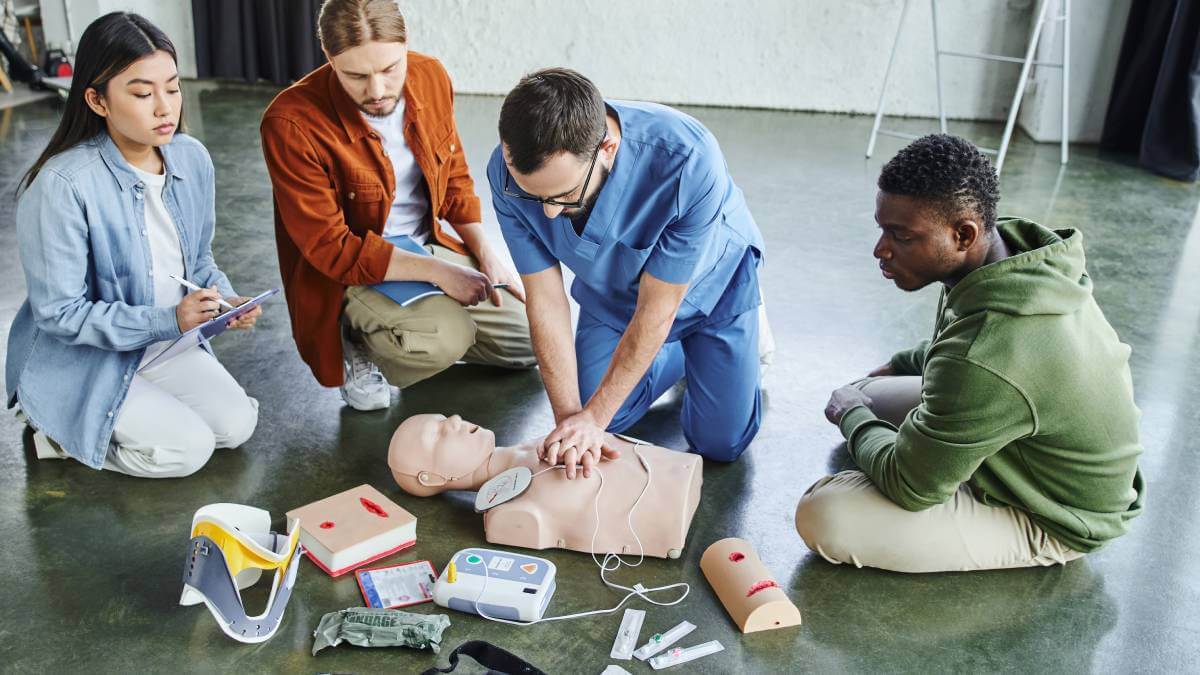
A defibrillator is a portable medical device that delivers an electric shock to the heart to help restore a normal rhythm during a sudden cardiac arrest (SCA). When someone’s heart stops beating effectively, blood and oxygen can no longer circulate around the body, and without prompt intervention, this can quickly become fatal.
Modern defibrillators, known as Automated External Defibrillators (AEDs), are specifically designed so anyone, even without medical training, can use them confidently. They give clear, step-by-step voice and visual instructions, guiding you through the process from start to finish.
You’ll often find AEDs in public spaces such as airports, shopping centres, gyms, schools, and workplaces. Many are stored in clearly marked yellow or green cabinets. According to the British Heart Foundation, early CPR combined with defibrillation within the first few minutes of cardiac arrest can more than double a person’s chances of survival.
What Does A Defibrillator Do?
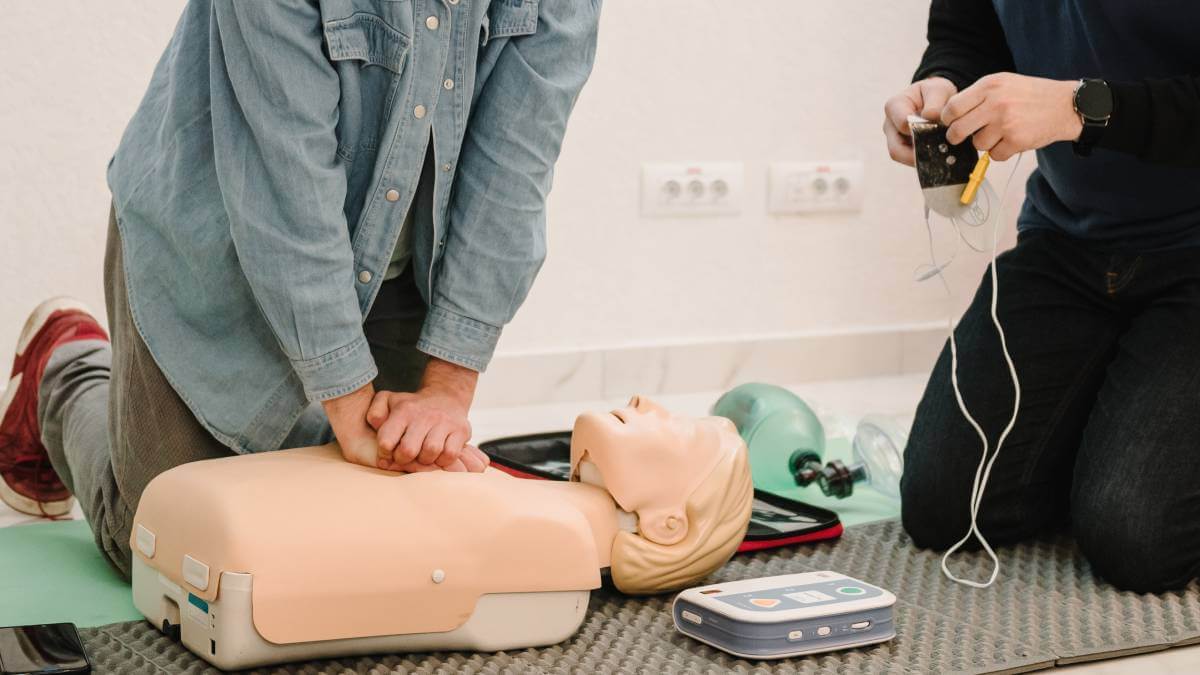
When a person experiences cardiac arrest, their heart’s electrical system malfunctions, causing it to beat chaotically or stop altogether. A defibrillator’s job is to correct this by delivering a controlled electric shock that stops the irregular rhythm, allowing the heart’s natural pacemaker to restart a normal beat.
Here’s how it works step by step:
- Cardiac arrest: The person’s heart stops pumping blood effectively, and they become unresponsive and not breathing normally.
- Analysis: Once the defibrillator is turned on and the electrode pads are attached, the device automatically analyses the heart’s rhythm.
- Shock delivery: If needed, the AED will either instruct the user to press a button (semi-automatic mode) or deliver the shock automatically (fully automatic mode).
- Restoration: The shock interrupts the chaotic electrical activity, giving the heart a chance to restart in a normal rhythm.
When To Use A Defibrillator
A defibrillator should be used as soon as possible when someone is in cardiac arrest, meaning they are unresponsive, not breathing normally, and have no pulse.
It’s important to remember that a heart attack is not the same as cardiac arrest. During a heart attack, the person is usually conscious and breathing; in that case, you should still call 999 but not use a defibrillator unless the person becomes unresponsive and stops breathing.
If someone collapses:
- Check for responsiveness and normal breathing.
- If there’s no response, call 999 immediately and start CPR.
- Ask someone nearby to bring the nearest defibrillator.
- Follow the AED’s voice instructions once it arrives.
AEDs are designed to be used by anyone, even without training, and they will guide you through every step.
Where Is My Nearest Defibrillator?
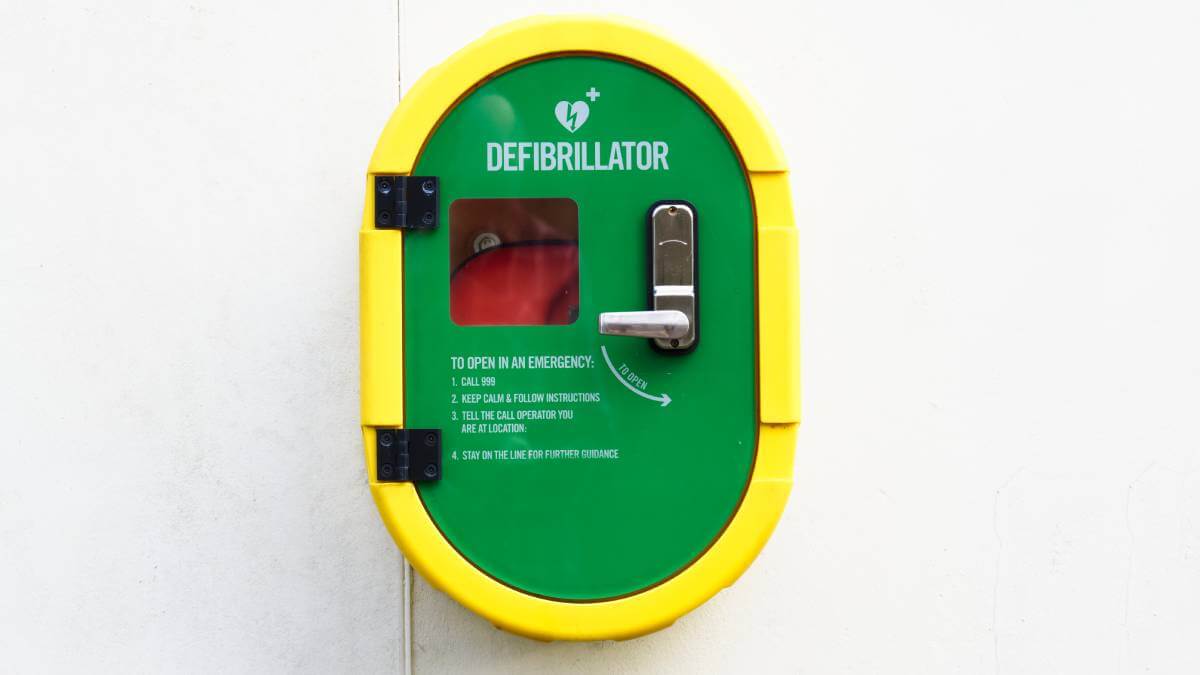
Public-access defibrillators (PADs) are becoming more common across the UK. You’ll find them in shopping centres, workplaces, gyms, schools, and community buildings, often inside bright green or yellow cabinets marked “AED.”
To locate one quickly, you can use Defib Finder, which draws information from The Circuit – the national defibrillator network. Simply enter your location or postcode to see where the nearest AED is located. Early CPR and defibrillation can double a person’s chances of survival during an out-of-hospital cardiac arrest.
Whenever you’re out and about, you can also help improve coverage by using the Defib Finder app to report any AEDs you spot that aren’t listed. Uploading photos and locations helps ensure that every available device is registered and accessible when it’s needed most.
Who Can Use a Public Access Defibrillator?
Anyone can use a public access defibrillator (AED). These devices are designed for safe use by the public, with or without prior training. When switched on, they provide a calm, clear voice and visual prompts that guide you through every step of the process, from placing the pads to delivering a shock if necessary. Importantly, an AED will only deliver a shock if it detects that one is needed, so you can never accidentally cause harm by using it.
Can You Use A Defibrillator On Someone With A Pacemaker?
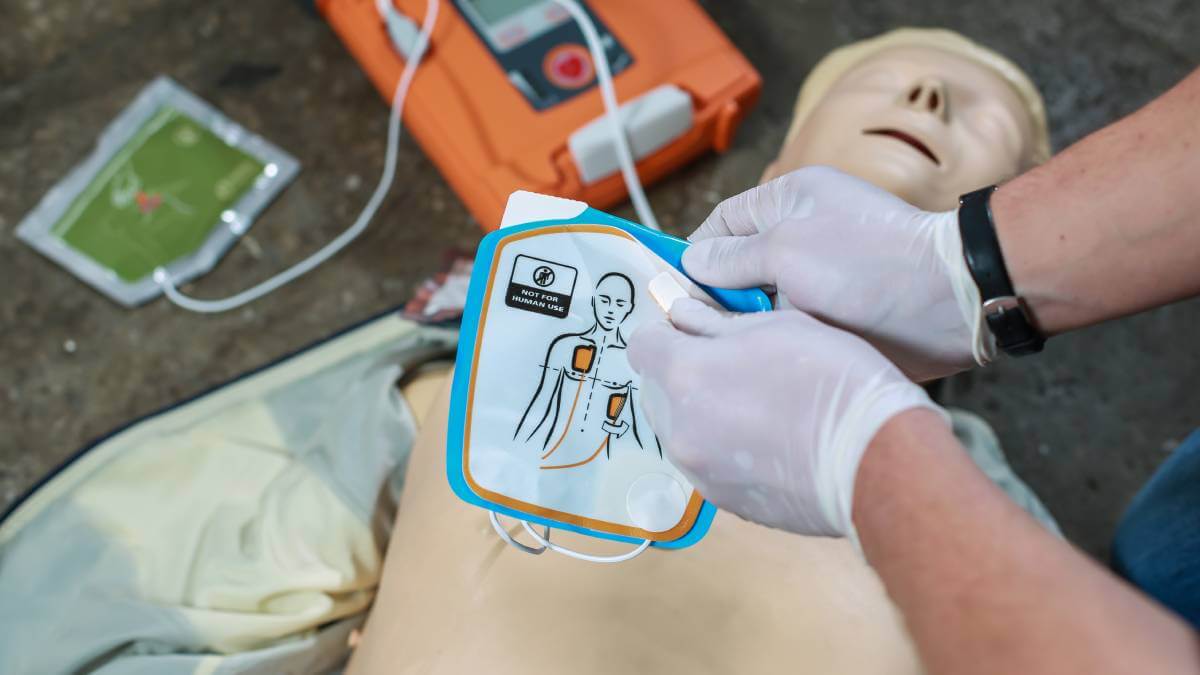
Yes, it’s completely safe to use an AED on someone who has a pacemaker or implantable cardioverter defibrillator (ICD). Most pacemakers are fitted in the upper left side of the chest, just beneath the collarbone.
When placing AED pads, avoid placing them directly over the device. Instead:
- Place one pad on the upper right side of the chest, just below the collarbone.
- Place the other pad on the lower left side, below the armpit.
This placement ensures the electrical current passes through the heart effectively while avoiding the pacemaker.
During CPR, chest compressions are performed in the centre of the chest, which does not interfere with a pacemaker. The benefits of performing CPR and using a defibrillator far outweigh any minor risks.
How To Use A Defibrillator
After performing a primary survey and finding someone unresponsive and not breathing normally, ask a helper to call 999 and request an ambulance while you start CPR. If available, ask someone else to bring a defibrillator.
If you’re unsure what to check during the initial assessment, our guide titled First Aid Basics: What Is First Aid? explains the key steps to take before emergency services arrive.
Do not leave the casualty to find a defibrillator yourself, send someone else if possible. The emergency medical adviser can tell them exactly where the nearest one is. If you’re alone, use your phone in speaker mode so you can continue CPR while speaking to ambulance control.
Check responsiveness and breathing
- Tap the person’s shoulders and ask loudly, “Are you okay?”
- If there’s no response and they’re not breathing normally, they may be in cardiac arrest.
Call for help
- Dial 999 immediately.
- Use the phone’s speaker function so you can start CPR while speaking to the operator.
- Ask someone nearby to bring the nearest defibrillator.
Start CPR immediately
- Place the heel of one hand in the centre of the chest, place your other hand on top, and interlock your fingers.
- Push hard and fast — about 5–6cm deep at a rate of 100–120 compressions per minute.
- If trained, give rescue breaths after every 30 compressions; otherwise, continue with hands-only CPR.
Prepare and switch on the defibrillator
- As soon as the AED arrives, turn it on — some will power on automatically when opened.
- Follow the voice and visual prompts exactly as they’re given.
Attach the pads
- Expose the chest by cutting or removing clothing.
- Dry the skin if it’s wet.
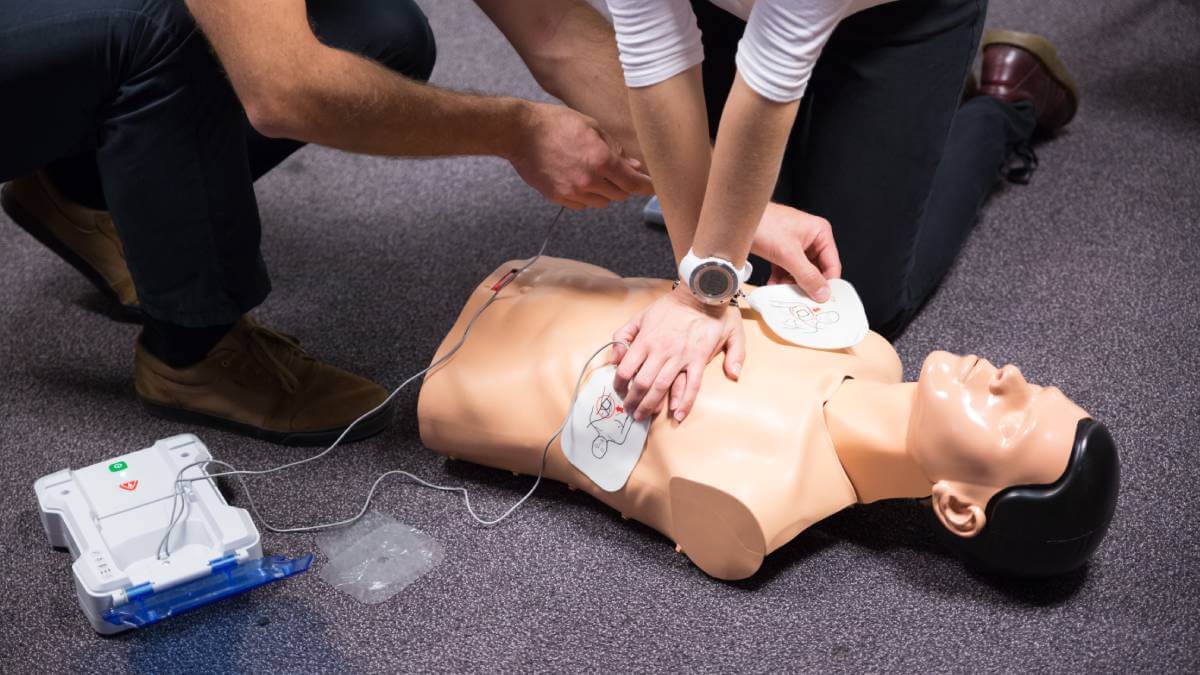
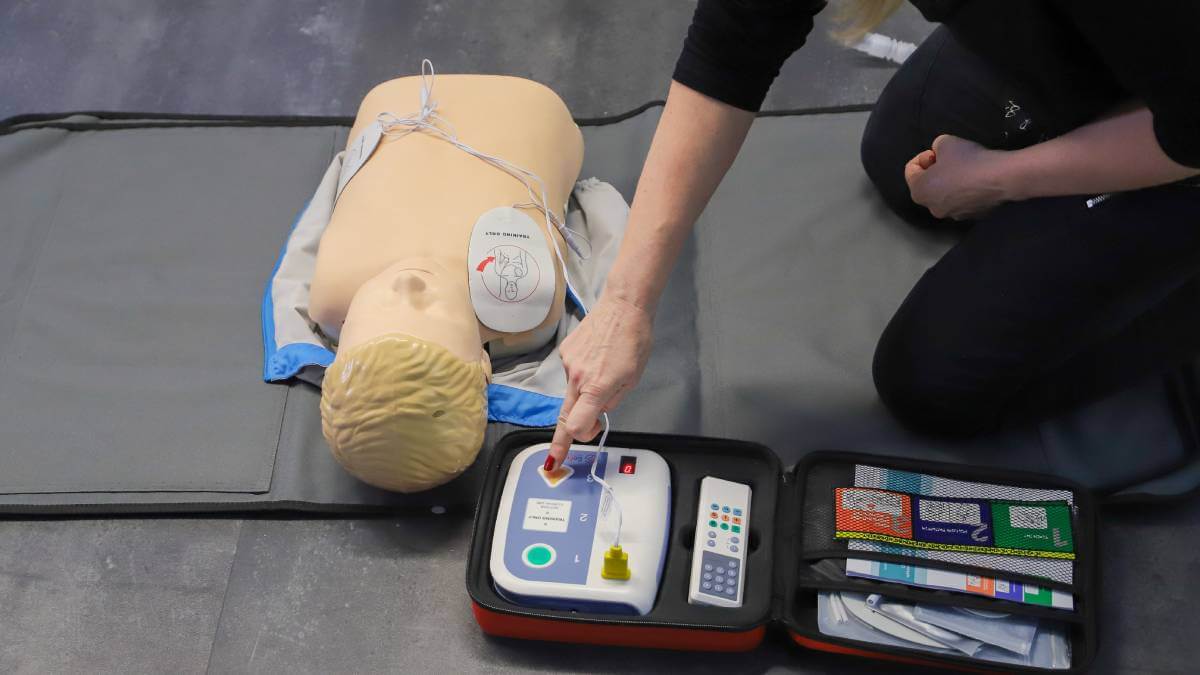
- Apply the pads as shown on the diagrams.
- For adults, one pad on the upper right chest and one on the lower left side.
- For children or infants, one pad is placed in the centre of the chest and the other on the back between the shoulder blades.
- If the pads have a sensor under the hands, briefly pause CPR to position them correctly.
Let the AED analyse the heart rhythm
- Once pads are attached, the defibrillator will say, “Do not touch the patient.”
- Make sure no one is touching the person.
Deliver the shock if instructed
- If the AED advises a shock, ensure everyone stands clear and say loudly, “Stand back!”
- Press the shock button when prompted (on semi-automatic devices).
- On fully automatic devices, the AED will deliver the shock itself.
Continue CPR
- Immediately continue CPR for two minutes, following the AED’s prompts.
- The AED will then reanalyse the rhythm and guide your next steps.
Recovery
- If the person starts breathing normally, stop CPR and place them in the recovery position.
- Leave the AED pads attached in case their condition changes.
- Continue to monitor their breathing until emergency services arrive.
Safety reminders:
- Do not use a defibrillator in a pool of water. Move the person to a dry surface first.
- Avoid placing pads over jewellery, medication patches, or pacemakers.
- Follow all instructions carefully — AEDs are designed to keep you safe.
Why Defibrillator Training Matters
While AEDs are designed for anyone to use, training makes a significant difference in how quickly and effectively you respond. In an emergency, confidence and speed are crucial — and both are developed through practice.
Training with an experienced provider like Medic 365 ensures you understand:
- How to recognise cardiac arrest early
- The correct technique for effective CPR
- How to operate different types of defibrillators
- How to remain calm and follow instructions under pressure
Medic 365’s training courses are delivered by experienced paramedics who bring real-life insight, helping you build practical, life-saving confidence that goes far beyond theory.
Be Prepared To Save A Life With Medic 365
Understanding how to operate a defibrillator is one of the most valuable skills you can learn. In just a few minutes, the actions you take could mean the difference between life and death.
At Medic 365, we believe that everyone, from individuals to workplace teams — should have the confidence to act in an emergency. Our CPR and AED courses provide you with the knowledge, hands-on experience, and confidence to respond effectively when it matters most.
We offer first aid courses in Milton Keynes , including workplace training that covers the use of defibrillators, CPR, and emergency response skills tailored to your industry.
Every second counts in an emergency — and preparation makes all the difference. Build your confidence and lifesaving skills with professional training from Medic 365, trusted by healthcare providers and workplaces across Milton Keynes.